 snuup
AI has the wrong information about my business. How do I fix it?
Updated 17 August 2026
AI repeats whatever the web says about you, so a wrong price or address in an answer traces back to a page that is out of date. Updating your own site is the first step, but AI often leans on other sources too: your listings, your reviews and the lists your buyers trust. You fix it by correcting the fact in every place AI reads it, worded the same way each time, then waiting for the crawlers to read those pages again. There is no button that forces the change through.
Where the wrong fact comes from
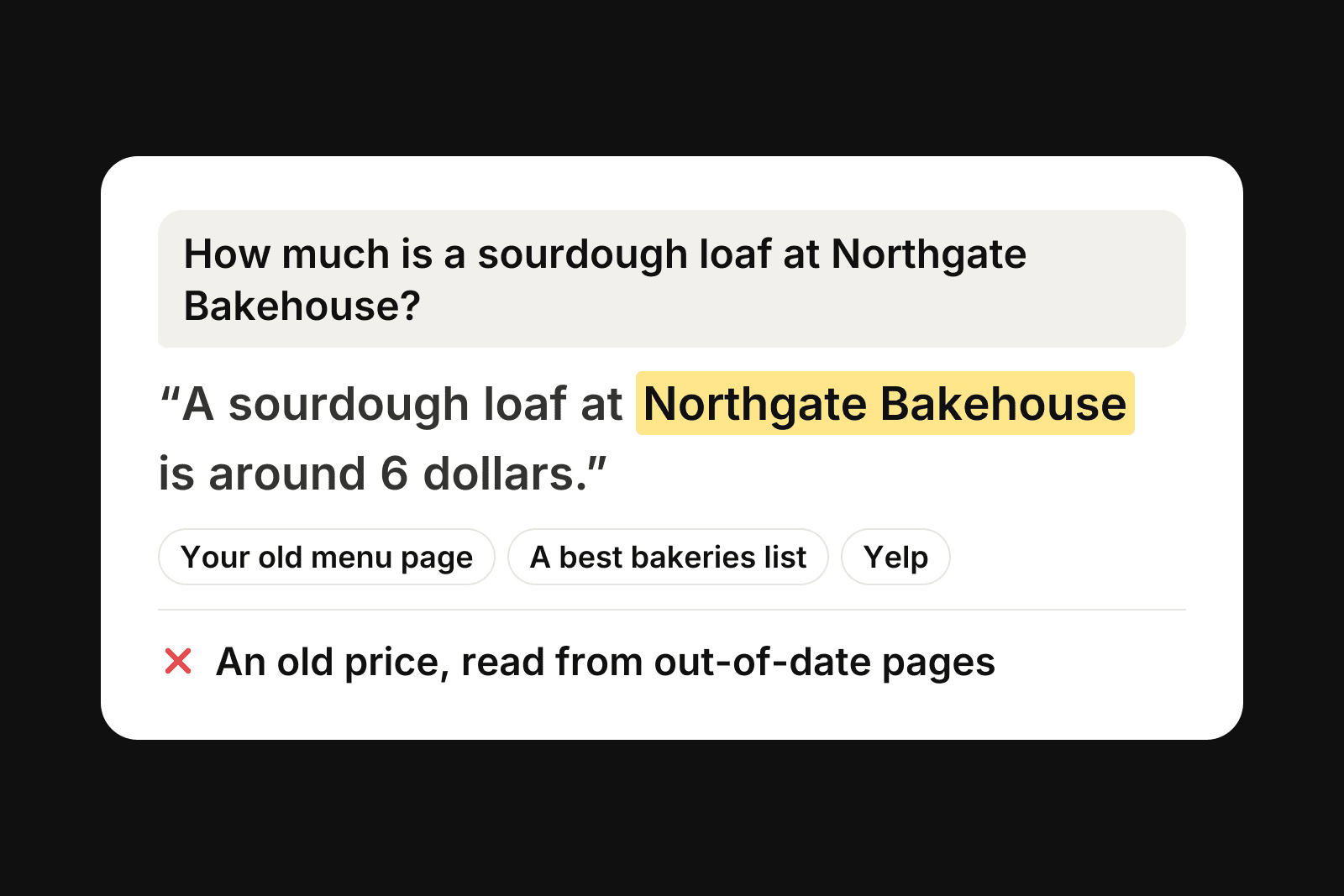
 An AI answer
How much is a sourdough loaf at Northgate Bakehouse?
A sourdough loaf at Northgate Bakehouse is around 6 dollars.
From these pages
The loaf is 9 dollars now. The answer is only as current as the pages it read.
An assistant does not know your price. It reads pages about you and repeats what they say. So a wrong number in an answer is not the model inventing one. It is the model quoting a page that has the old number on it.
That means every wrong fact has a source you can find. The price it quoted lives on a page somewhere, and usually on more than one.
Check it: ask the assistant your buyers use for your price or hours, then ask it where that came from. The pages it names are the ones you need to fix.
Your own site is the start, not the whole job
You fixed one page. AI read three.
Menu now reads 9 dollars.
Still says 6 dollars.
Quote the old price.
AI blends what the trusted pages say. Two of three still carry the old number, so the old number wins.
Updating your own page is the right first move, and on its own it is often not enough. AI weighs the other pages it trusts about you, and if those still carry the old fact, the old fact can still win.
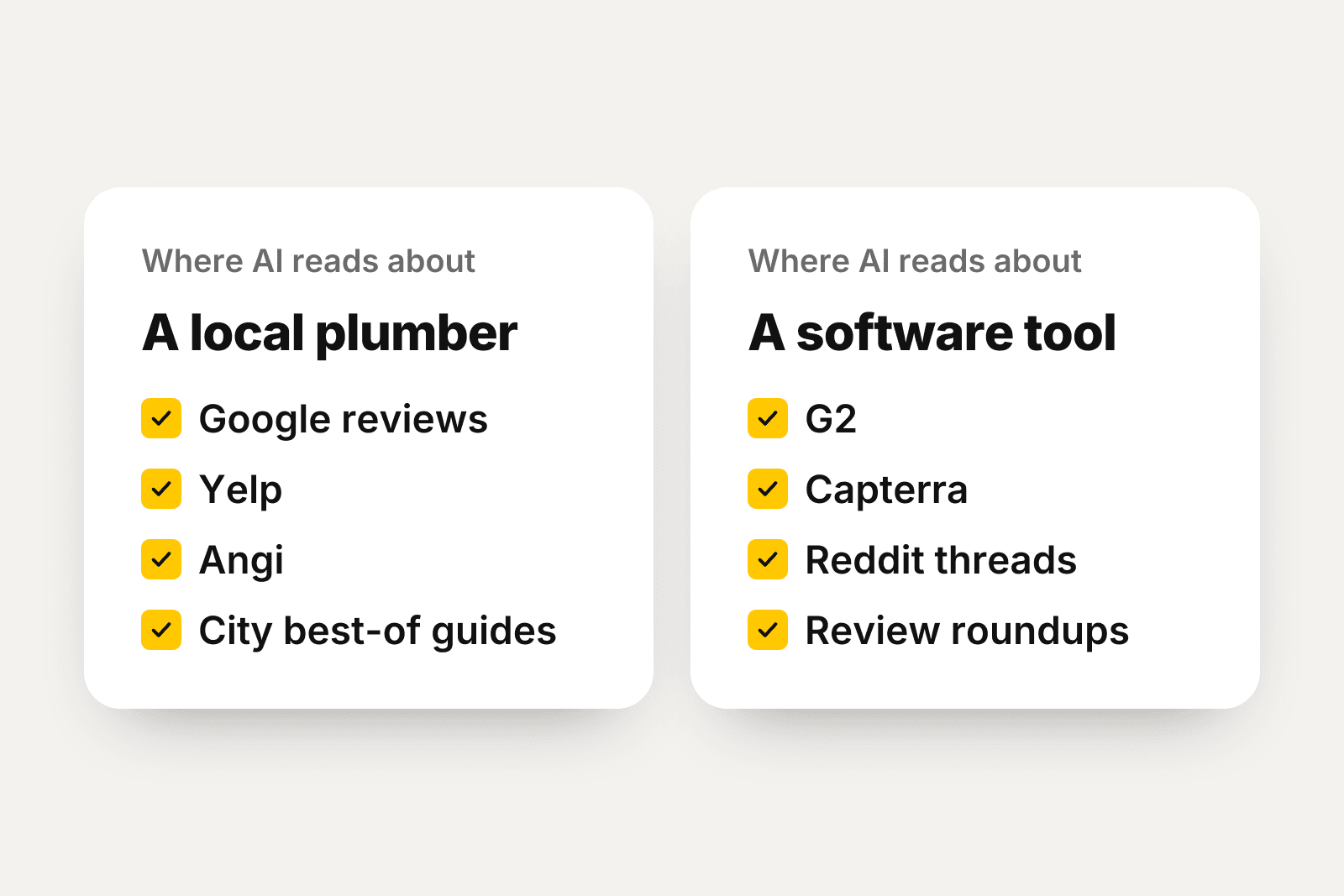
This is the same reason a competitor gets named over you: AI leans on the sites it trusts in your market. Those sources decide the answer, so a correction that skips them is only half done.
Fix the fact everywhere it lives
Fix the fact everywhere it lives
Same number, same words, in every place. One stray old copy can outvote the rest.
Track down every page that states the fact and make each one current. Your own page first, in plain text a crawler can read without running your design. Then the listings, the directories and the lists your buyers trust.
Keep the wording the same in every place. If one page says 9 dollars and another says nine, and a third still says 6, AI has to guess, and it may guess wrong. One consistent fact is easier to repeat than three slightly different ones.
- 1Put the correct fact in plain text near the top of your own page.
- 2Update your Google Business Profile and any map listing.
- 3Correct the directories and best-of lists that name you, and find the ones AI trusts in your trade.
- 4Reply to reviews or threads that quote the old fact, where you can.
Then it is a waiting game
Once the pages are correct, the answer does not change on its own straight away. A crawler has to read each fixed page again, and nobody publishes that schedule. Treat it as days to weeks for a page AI can already open.
A page it cannot open never gets re-read, so the old fact stays. If your corrected page is blocked or loads its words through code a crawler skips, the fix never lands. Our free AI crawler check tells you whether your page can be read at all.
See whether the correction landed
The only way to know a fix worked is to ask the same question again and read the answer. On the Snuup plan, every month we ask the assistants your buyers use, ChatGPT, Claude, Gemini and Perplexity, the questions your buyers ask, and you read the answers word for word, wrong facts included.
We fix what feeds them: your website, the new articles we write for it and the listings we write for you to paste in. The next month's answers show whether the correction took. Snuup's free AI visibility check shows the problems on your website first.